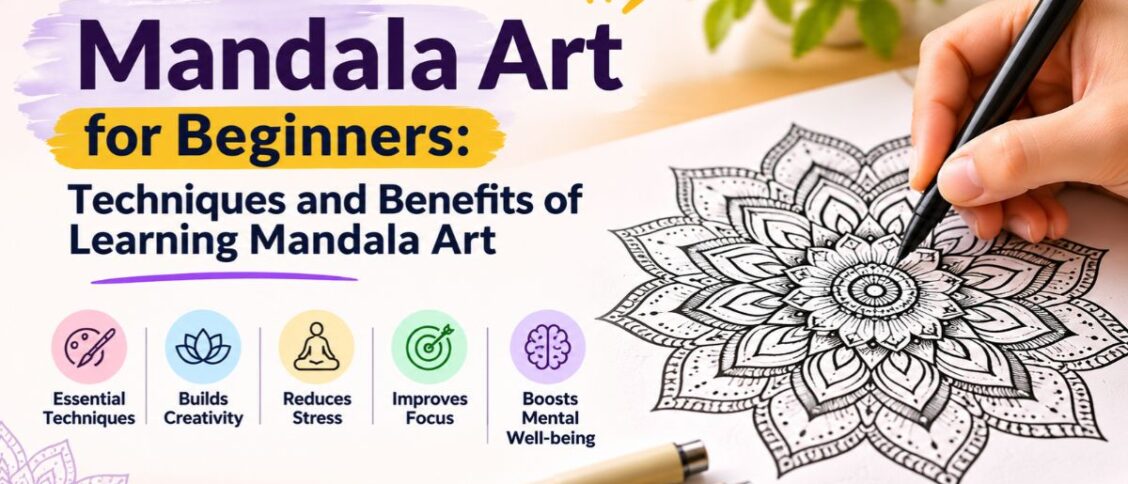

Mandala Art for Beginners is a wonderful way to explore creativity, learn beautiful geometric patterns, and enjoy a relaxing artistic activity. Mandala art combines circles, dots, lines, and intricate designs to create unique artwork. Whether you are a child, student, working professional, or adult, you can start learning Mandala drawing without any previous experience.
If you are new to Mandala drawing, you can begin with simple techniques and gradually explore advanced patterns with regular practice and proper guidance. With CalliStyle’s online Mandala course, learners can explore different Mandala techniques, from beginner-level designs to advanced Zen tangle doodles and gradient Mandalas.
Through CalliStyle’s Mandala Course, learners can explore different Mandala techniques, from beginner-level designs to advanced Zen tangle doodles and gradient Mandalas, through online classes.
What Is Mandala Art?
Mandala is a Sanskrit word that means “circle.” Mandala art is traditionally created using geometric shapes, repeating patterns, and symmetrical designs arranged around a central point.
A Mandala usually begins with a central circle and develops through multiple layers of patterns. Artists use dots, lines, petals, triangles, and other geometric elements to create detailed artwork.
Mandala art is also associated with meditation, mindfulness, and self-reflection. The repetitive process of drawing patterns can help artists focus on the present moment and enjoy a peaceful creative activity.
Why Should Beginners Learn Mandala Art?
Mandala art is suitable for people of different ages because it does not require advanced drawing skills to begin. Beginners can start with simple circles, dots, and lines before moving towards more detailed patterns.
Here are some reasons to explore Mandala drawing:
1. Encourages Creativity
Mandala drawing gives you the freedom to experiment with shapes, patterns, and colours. You can create unique designs by combining simple geometric elements in different ways.
2. Helps Improve Concentration
Creating a Mandala requires attention to detail. Repeating patterns around a central point encourages learners to focus on their drawing and follow each step carefully.
3. Encourages Relaxation
Many people enjoy Mandala drawing as a relaxing activity. Concentrating on repetitive patterns can provide a peaceful break from everyday responsibilities.
4. Develops Fine Motor Skills
Drawing small dots, curved lines, and detailed patterns requires controlled hand movements. This can help children improve their hand-eye coordination and fine motor skills.
5. Builds Patience
Mandala artwork often involves multiple layers of patterns. Completing each section gradually teaches beginners the value of patience and consistent practice.
6. Supports Self-Expression
Every Mandala can be different. Learners can choose their own shapes, colours, and patterns to express their imagination and artistic ideas.
Mandala Art for Beginners: Basic Techniques to Learn
Starting Mandala art becomes easier when you understand a few fundamental techniques. Beginners should focus on simple designs before attempting complicated patterns.
1. Dot Mandala Technique
Dot Mandala is one of the popular ways to create Mandala artwork. It involves arranging dots of different sizes to form symmetrical patterns.
Beginners can start by drawing a central dot and creating circles of smaller and larger dots around it. Dotting tools, cotton buds, or the back of a paintbrush can help create different dot sizes.
2. Pen Mandala Technique
Pen Mandala involves creating detailed patterns using pens or fine-point drawing tools.
You can begin with a central circle and divide the design into sections. Add simple lines, curves, petals, and geometric patterns to each section.
3. Geometric Pattern Technique
Geometric Mandalas use shapes such as circles, triangles, squares, and repeated lines.
Start with basic shapes and repeat them around the centre to develop a balanced design. This technique helps beginners understand symmetry and pattern arrangement.
4. Gradient Mandala Technique
Gradient Mandalas involve creating smooth transitions between different colours or shades.
Learners can experiment with light and dark tones to add depth to their artwork. This technique is suitable for those who have already developed basic Mandala drawing skills.
5. Zen Tangle Doodle Technique
Zen tangle doodle techniques involve filling different sections with repeated decorative patterns.
You can experiment with curved lines, dots, waves, and small shapes to create detailed designs. This technique encourages creativity and helps learners explore different artistic patterns.
Materials Required to Start Mandala Drawing
One of the advantages of Mandala art is that beginners can start with simple drawing materials.
Here are some basic supplies:
- Plain drawing paper or a sketchbook
- Pencil and eraser
- Ruler and compass
- Black fine-tip pens
- Colour pens or pencils
- Dotting tools
- Paints and brushes for colourful Mandala designs
You do not need expensive materials to begin. Start with basic supplies and explore additional tools as your skills improve.
Benefits of Learning Mandala Art
Mandala drawing is not only a creative activity but can also provide several personal and learning benefits.
1. Relaxation and Mindful Practice
Drawing repeated circles and patterns can help learners concentrate on their activity. Many people use Mandala art as a form of mindful creative practice to take a break from daily stress.
2. Improves Focus and Patience
Creating detailed Mandalas takes time and attention. Following patterns and maintaining symmetry encourages patience and concentration.
3. Encourages Self-Reflection
The repetitive and creative nature of Mandala drawing can provide an opportunity for personal reflection. Learners can enjoy a quiet activity while exploring their thoughts and ideas.
4. Develops Artistic Skills
Practising Mandala art helps learners understand shapes, symmetry, spacing, patterns, and colour combinations. These skills can support further exploration of different art forms.
5. Creates Beautiful Decorative Artwork
Completed Mandalas can be used as decorative artwork for rooms, notebooks, handmade cards, and creative projects. Learners can also explore different ways to share their artwork.
Note: Mandala drawing can be a relaxing creative activity, but it should not be considered a substitute for professional medical or mental health treatment.
Learn Mandala Art Online with CalliStyle
If you want to learn Mandala art with structured guidance, joining an online course can help you understand techniques step by step.
CalliStyle offers online Mandala classes for children and adults aged four years and above. The course is designed for beginners as well as learners who want to develop more advanced Mandala techniques.
Why Choose CalliStyle’s Mandala Course?
The course includes several learning features:
- Experienced Trainers: Learn from trainers with over seven years of experience.
- Small Learning Groups: Classes have no more than two students, helping provide individual attention.
- Flexible Online Learning: Learn from home according to the available schedule.
- Mobile-Friendly Classes: Attend lessons using a mobile device without necessarily needing a laptop.
- Practical Assignments: Practise Mandala techniques through creative activities.
- Doubt-Clearing Support: Ask questions through the Q&A forum.
- Post-Course Support: Receive mentor support even after course completion.
- Course Certification: Receive certification after completing the course.
- Downloadable Content: Access downloadable learning materials with lifetime access, as described on the course page.
CalliStyle also follows the Observation, Engagement, and Attraction learning model to support learners at their own pace.
What Will You Learn in CalliStyle’s Mandala Course?
The CalliStyle Mandala course covers different techniques across beginner, intermediate, and advanced stages.
Beginner Level
At the beginner level, learners are introduced to basic Mandala patterns and drawing methods. They can practise simple shapes, lines, dots, and symmetrical designs.
This stage helps students understand how to create Mandala patterns using basic drawing techniques.
Intermediate Level
At the intermediate level, learners can explore more detailed designs and gradient Mandalas. They gradually develop their understanding of pattern combinations and creative arrangements.
Advanced Level
The advanced stage introduces Zen tangle doodle techniques and advanced Mandala art. Learners can experiment with more detailed patterns and develop their own creative designs.
Course Duration
According to the CalliStyle course page:
- Dot Mandala Art: 8 classes per level, across 3 levels.
- Pen Mandala Art: 8 classes per level, across 3 levels.
Contact CalliStyle to confirm the current class schedule and batch availability.
Who Can Join Online Mandala Classes?
Mandala art can be learned by people from different backgrounds. CalliStyle’s course is open to learners aged four years and above.
It can be suitable for:
- Children and Students: Explore creativity and improve drawing skills.
- Working Professionals: Enjoy a creative activity outside work.
- Business Owners: Develop an artistic hobby during free time.
- Homemakers: Learn Mandala techniques from home.
- Adults and Beginners: Explore a new creative skill without previous experience.
No prior Mandala drawing knowledge is required to get started.
Tips to Improve Your Mandala Art Skills
Regular practice can help beginners become more confident in creating detailed Mandala designs.
Follow these simple tips:
- Start with Simple Patterns: Practise circles, dots, petals, and basic geometric shapes.
- Use Guidelines: Draw light pencil lines to divide your paper into equal sections.
- Maintain Symmetry: Repeat similar patterns around the central point.
- Experiment with Colours: Try different colour combinations to make your designs attractive.
- Practise Different Techniques: Explore Dot Mandala, Pen Mandala, and gradient patterns.
- Be Patient: Do not rush through detailed designs. Complete each section carefully.
- Learn from Expert Guidance: Join structured classes to understand techniques and improve through feedback.
Start Your Creative Journey with CalliStyle
Mandala art is a wonderful way to explore creativity, practise patience, and enjoy a peaceful artistic activity. From simple dot patterns to advanced Zen tangle doodles, beginners can gradually develop their skills through regular practice.
CalliStyle’s Mandala Course provides online learning for children and adults, with experienced trainers, small learning groups, practical assignments, downloadable content, and course certification.
If you are interested in learning Mandala art, book a demo with CalliStyle and explore the course before enrolling.
Start learning Mandala art with CalliStyle and turn simple patterns into beautiful creations!
Frequently Asked Questions
1. Can beginners learn Mandala art?
Yes. Beginners can start with simple circles, dots, lines, and geometric patterns. With regular practice, they can gradually create more detailed Mandala designs.
2. Can adults learn Mandala art online?
Yes. Adults can learn Mandala drawing through online classes and practise different techniques from home.
3. Is Mandala art good for relaxation?
Many people find Mandala drawing relaxing because it involves repetitive patterns and focused creative activity. It can be used as a mindful hobby.
4. What equipment is needed for Mandala art?
Basic materials include drawing paper, pencils, erasers, a compass, a ruler, fine-tip pens, and optional colouring tools or dotting tools.
5. Can Mandala art be learned online?
Yes. Beginners can learn Mandala techniques through online demonstrations, trainer guidance, and practical assignments.
6. Is CalliStyle’s Mandala course certified?
Yes. According to the CalliStyle course page, certification is provided after completing the course.
7. What is the duration of CalliStyle’s Mandala course?
The course page lists eight classes per level for Dot Mandala Art and Pen Mandala Art, with three levels for each course.
8. Can children join CalliStyle’s Mandala classes?
Yes. The course is available for learners aged four years and above.
9. Can I create colourful Mandala designs?
Yes. You can use colour pencils, markers, paints, and other colouring materials to create colourful Mandala artwork.
10. Does Mandala art require previous drawing experience?
No. Beginners can start with basic patterns and gradually learn more advanced techniques through practice and guidance.
Do follow us on Facebook