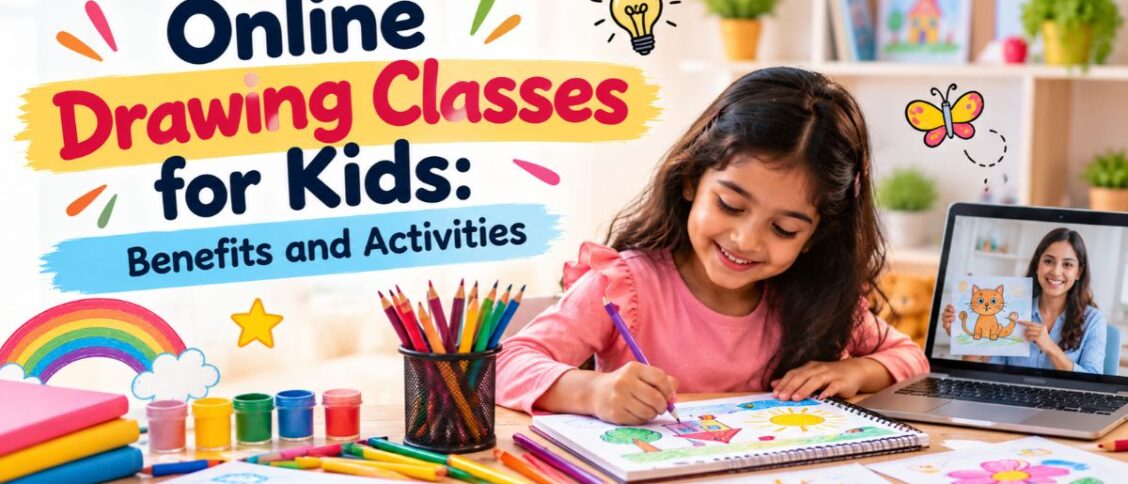

Drawing is one of the most enjoyable ways for children to express their imagination and explore creativity. From sketching simple shapes to creating colourful pictures, drawing gives children an opportunity to turn their ideas into artwork. A drawing course online can help young learners develop artistic skills through structured lessons and regular practice from home.
Children do not need to be naturally talented artists to begin drawing. They can start with basic lines, shapes, and patterns before moving on to shading, colouring, and painting techniques. With guidance and encouragement, they can gradually develop their own artistic style.
CalliStyle offers an online drawing course for learners of different age groups. Its course information highlights beginner-to-advanced lessons, experienced trainers, small learning groups, assignments, and certification after course completion.
Why Is Drawing Important for Kids?
Drawing is more than just putting colours and shapes on paper. It gives children a way to explore ideas, express feelings, and develop practical artistic skills.
1. Encourages Creativity and Imagination
Drawing allows children to create pictures based on their imagination. They can draw animals, nature, people, buildings, and imaginary characters.
There is no single correct way to create an imaginative drawing. Giving children the freedom to experiment can help them explore different ideas and styles.
2. Develops Fine Motor Skills
Drawing involves holding pencils, crayons, brushes, and other art materials. Activities such as colouring within shapes, tracing lines, and drawing small details give children opportunities to practise hand movements and coordination.
These activities can support the development of fine motor control.
3. Provides a Way to Express Feelings
Sometimes children find it difficult to explain their thoughts and emotions in words. Drawing can give them another way to express what they imagine, enjoy, or experience.
Parents can encourage children to talk about their artwork without judging or correcting every detail.
4. Encourages Focus and Patience
Completing a drawing often involves several steps, such as sketching, adding details, colouring, and reviewing the final picture.
Working through these steps gives children opportunities to practise concentration and patience.
5. Builds Confidence
Completing an artwork can give children a sense of achievement. Displaying their drawings at home or sharing them with family members can encourage them to continue practising.
Parents should appreciate the effort and creativity involved rather than comparing one child’s artwork with another’s.
10 Fun Drawing Activities for Kids at Home
Children can practise drawing using simple materials available at home. Here are ten activities that can make creative learning enjoyable.
1. Draw Basic Shapes
Start with circles, squares, triangles, rectangles, and ovals. These simple shapes form the foundation of many drawings.
Encourage children to combine shapes to create familiar objects.
For example:
- A circle and two triangles can become a cat’s face.
- A rectangle and a triangle can become a house.
- Circles and lines can become a flower.
2. Create Animal Drawings
Animals are interesting subjects for young artists. Begin with simple drawings of cats, dogs, fish, birds, butterflies, and elephants.
Children can learn to use basic shapes to create animal outlines before adding eyes, patterns, and other details.
3. Try Nature Drawing
Nature provides plenty of inspiration for drawing activities.
Ask children to draw:
- Trees and flowers
- Mountains and rivers
- Clouds and rainbows
- Sunsets
- Leaves and butterflies
- Gardens and landscapes
They can also observe plants and objects around the house or garden before drawing them.
4. Practise Colouring Activities
Colouring helps children explore different colours and practise controlling their drawing tools.
Give them simple outlines of fruits, animals, vehicles, or cartoon-style characters. Encourage them to experiment with colour combinations.
5. Draw Your Favourite Cartoon Character
Children often enjoy drawing characters they recognise from stories and cartoons.
Start with simple outlines and basic shapes. Encourage children to add their own creative details rather than focusing only on copying the original character perfectly.
6. Make a Family Portrait
Ask children to draw the people in their family. They can add details such as clothes, hairstyles, expressions, and backgrounds.
This activity gives children an opportunity to create personal artwork based on familiar people.
7. Try Dot-to-Dot Drawing
Create numbered dots that form a simple picture when connected in order.
This activity helps children practise following sequences and controlling pencil movements. Once the outline is complete, they can colour the picture.
8. Explore Pattern Drawing
Introduce simple patterns such as lines, dots, circles, zigzags, and repeated shapes.
Children can combine patterns to create decorative borders, colourful backgrounds, or imaginative designs.
9. Learn Light and Shade
Once children are comfortable with basic sketching, introduce simple shading exercises.
They can draw a ball or an apple and practise using light and dark pencil strokes to create the appearance of depth.
10. Create a Mini Art Project
Give children a small theme, such as “My Dream House,” “A Day at the Beach,” or “My Favourite Garden.”
Ask them to create a complete drawing using the skills they have practised. This can help them combine shapes, colours, patterns, and details in one artwork.
What Will Kids Learn in an Online Drawing Course?
A structured drawing course can introduce artistic techniques in a planned order. CalliStyle describes its drawing programme as having three levels: Basic, Intermediate, and Advanced.
1. Basic Drawing Course
The basic level introduces the fundamentals of drawing. It is suitable for learners who are starting with simple techniques.
Topics include:
- Drawing lines and basic shapes
- Understanding simple forms
- Sketching familiar objects
- Practising outlines
- Developing basic drawing techniques
- Completing a final capstone project
These lessons help learners build a foundation before moving to more detailed artwork.
2. Intermediate Drawing Course
The intermediate level introduces techniques that help learners add depth and detail to their drawings.
Topics include:
- Understanding light and shade
- Practising shading techniques
- Creating depth in artwork
- Exploring brush techniques
- Learning basic painting methods
- Completing an intermediate final project
Students can use these techniques to make their artwork more detailed and expressive.
3. Advanced Drawing Course
The advanced level focuses on developing more detailed drawing skills.
According to CalliStyle’s course information, topics include shading techniques and lined-paper drawing, along with a final review and capstone project.
Learners can practise combining different techniques and applying them to more detailed artwork.
Benefits of Joining Online Drawing Classes
Practising at home is useful, but structured lessons can provide additional guidance and feedback.
1. Learn from Home
Online drawing lessons allow children to learn from a convenient location without travelling to a physical classroom.
2. Get Guidance from Experienced Trainers
A trainer can demonstrate drawing techniques, explain mistakes, and guide students through different stages of an artwork.
CalliStyle states that its teachers and trainers have over eight years of experience.
3. Receive Individual Attention
CalliStyle describes its learning groups as having no more than two students. Smaller groups can provide more opportunities for interaction and individual feedback.
Confirm current batch size and availability before enrolling.
4. Practise Through Assignments
Assignments give children opportunities to revise lesson topics and apply techniques independently.
Regular drawing practice can help learners become more familiar with different tools and methods.
5. Access Mobile-Friendly Learning
CalliStyle highlights mobile-friendly online learning, allowing students to access lessons using compatible devices. A laptop may not always be necessary, depending on the class format.
6. Get Doubt-Clearing Support
Children may have questions about sketching, shading, colouring, or drawing techniques. CalliStyle mentions question-and-answer support for students.
7. Receive a Certificate
CalliStyle states that its drawing course provides certification after completion. Parents can enquire about the course completion requirements and certificate details.
8. Continue Learning After Classes
CalliStyle’s course information mentions downloadable content and support after course completion. Contact the team to confirm the current resources and access arrangements.
Why Consider CalliStyle for a Drawing Course Online?
CalliStyle is an ed-tech startup offering hobby and language courses to learners of different age groups. Its online drawing course is designed to introduce students to artistic techniques through structured learning.
The course highlights include:
- Beginner to advanced levels: Learn drawing through three progressive course levels.
- Experienced trainers: The website mentions trainers with over eight years of experience.
- Small learning groups: Groups are described as having no more than two students.
- Flexible online learning: Learn from home using suitable devices.
- Assignments: Practise techniques through practical activities.
- Doubt-clearing support: Get help through a question-and-answer forum.
- Downloadable content: The website mentions lifetime access to learning materials.
- Course certification: Certification is provided after course completion, according to the website.
CalliStyle lists approximately 20–25 classes per level across three levels. Contact the team to confirm the current class schedule, fees, required drawing materials, and course details.
Who Can Join Online Drawing Classes?
Drawing is an activity that people of different ages can enjoy. CalliStyle describes its drawing course as suitable for learners aged four years and above.
The course may be useful for:
- Young children: Explore colours, shapes, and simple drawings.
- School students: Develop drawing techniques and creative skills.
- Teenagers: Practise sketching, shading, and more detailed artwork.
- Working professionals: Explore drawing as a creative hobby.
- Homemakers: Learn artistic techniques during their free time.
- Beginners: Start learning without previous drawing experience.
Parents should confirm age suitability and the teaching format before enrolling young children.
Simple Drawing Materials Needed at Home
Children can begin drawing with a few basic materials. The exact supplies depend on the lessons and techniques being taught.
Useful materials include:
- Drawing notebooks or sketchbooks
- HB and 2B pencils
- Erasers and sharpeners
- Colour pencils
- Crayons
- Sketch pens
- Watercolours or poster colours
- Paintbrushes
- A ruler
For beginner lessons, a pencil, eraser, and drawing paper may be enough. Ask the trainer for a recommended materials list before purchasing additional supplies.
Frequently Asked Questions About Online Drawing Classes
1. Can kids learn drawing online?
Yes. Children can learn drawing through online lessons, demonstrations, guided activities, and regular practice. The course should be appropriate for their age and skill level.
2. At what age can children start learning drawing?
Children can explore simple drawing activities at a young age. CalliStyle states that its drawing course is available for learners aged four years and above. Confirm the current age requirements before enrolment.
3. Can adults learn drawing online?
Yes. Adults can learn drawing even if they have no previous experience. Starting with basic lines, shapes, and sketching techniques can help build a foundation.
4. Is drawing good for children?
Drawing gives children opportunities to express creativity, practise fine motor movements, explore ideas, and develop artistic skills. It can also be an enjoyable activity during free time.
5. What materials are required for an online drawing course?
Basic materials may include drawing paper, pencils, an eraser, a sharpener, and colouring tools. Additional materials depend on the course level and techniques being taught.
6. What are the levels in CalliStyle’s drawing course?
CalliStyle describes three levels: Basic, Intermediate, and Advanced. The basic course covers lines and shapes, the intermediate level includes light, shade, and brush techniques, and the advanced level focuses on more detailed drawing techniques.
7. How many classes are included in the drawing course?
CalliStyle lists approximately 20–25 classes per level across three levels. Contact the course team to confirm the current schedule and duration.
8. Does CalliStyle provide a certificate after the drawing course?
CalliStyle states that certification is provided after course completion. Ask about the completion requirements and certificate details before enrolling.
9. Can children learn drawing without prior experience?
Yes. Beginners can start with simple shapes, lines, and objects. A structured course can introduce more advanced techniques as their skills develop.
Help Your Child Explore Creativity with CalliStyle
Drawing gives children an opportunity to express their imagination, explore colours, and develop artistic skills. From simple shapes and animal sketches to shading and painting, regular activities can make creative learning enjoyable.
A drawing course online can provide structured lessons, trainer guidance, and practical assignments to support a child’s learning journey.
CalliStyle offers a drawing programme with Basic, Intermediate, and Advanced levels. Its course information highlights experienced trainers, small learning groups, online access, assignments, doubt-clearing support, and certification after course completion.
If your child enjoys drawing or wants to learn from the basics, explore CalliStyle’s course details and enquire about a demo session. Confirm the current schedule, fees, and required materials before enrolling.
do follow us on Facebook