
Introduction
Calligraphy for beginners is a great way to learn beautiful lettering, develop creative skills, and explore the art of decorative writing. Whether you are a student, an adult, or someone looking for a new creative hobby, learning calligraphy can help you practise letter formation, pen control, and artistic expression.
At CalliStyle, learners can explore creative learning opportunities, including brush pen and copperplate calligraphy, while students interested in clearer everyday writing can also learn about the Handwriting Improvement Program. With the right tools, step-by-step guidance, and regular practice, beginners can gradually develop their lettering skills and create beautiful designs
At CalliStyle, learners can explore creative courses, including calligraphy, alongside learning opportunities such as handwriting improvement. CalliStyle also works with schools to support students’ handwriting development through structured learning and practical training.
What Is Calligraphy?
Calligraphy is a form of artistic writing in which letters are created with attention to shape, proportion, spacing, and stroke movement. Unlike everyday handwriting, calligraphy focuses on the visual appearance of letters and the overall composition of words.
There are several calligraphy styles that beginners can explore.
1. Brush Pen Calligraphy
Brush pen calligraphy uses flexible brush tips to create strokes of different thicknesses. It is popular for decorative quotes, greeting cards, journal headings, and creative lettering projects.
2. Copperplate Calligraphy
Copperplate calligraphy is a traditional lettering style known for its elegant curves, slanted letterforms, and contrasting thick and thin strokes. It usually requires careful practice and suitable pen tools.
3. Modern Calligraphy
Modern calligraphy allows learners to experiment with letter shapes, spacing, and personal lettering styles. It is suitable for creative projects where learners want to develop their own visual approach.
Beginners can start with one style and gradually explore other techniques as their confidence grows.
Why Should Beginners Learn Calligraphy?
Learning calligraphy offers several creative and practical benefits for people of different ages.
1. Develops Letter Formation Skills
Calligraphy practice encourages learners to observe the shape, size, and structure of individual letters. Repeating basic strokes can help them become more aware of letter formation and consistency.
For students who are also working on handwriting improvement, practising letter shapes and spacing may complement their regular handwriting exercises.
2. Encourages Creativity
Calligraphy provides opportunities to explore different lettering styles, decorative elements, and artistic compositions.
Learners can use their skills to create greeting cards, bookmarks, personalised gifts, journal headings, and decorative quotations.
3. Builds Patience and Concentration
Creating balanced lettering requires attention to detail. Learners need to control their pen movements, follow guidelines, and practise individual strokes carefully.
Regular practice can encourage patience and focused participation in creative activities.
4. Supports Fine Motor Practice
Calligraphy involves controlled finger, hand, and wrist movements. These movements give learners opportunities to practise coordination and pen control.
The level of improvement varies by age, experience, and individual learning needs.
5. Creates Opportunities for Personal Projects
Once learners become comfortable with basic techniques, they can apply their skills to school projects, handmade cards, event invitations, and other creative activities.
Calligraphy can therefore become both a learning activity and a practical creative hobby.
Essential Calligraphy Tools for Beginners
Choosing suitable materials can make calligraphy practice more comfortable and manageable.
1. Brush Pens or Calligraphy Pens
Select a pen that matches the lettering style you want to learn. Brush pens are useful for modern lettering, while copperplate calligraphy may require a pointed nib and suitable ink.
2. Smooth Practice Paper
Smooth paper helps pens move comfortably and can reduce problems such as ink bleeding. For brush pens, suitable paper can also help protect the brush tip.
3. Pencil and Ruler
A pencil and ruler are useful for drawing guidelines. These lines help maintain consistent letter heights, alignment, and spacing.
4. Practice Worksheets
Worksheets with basic strokes, alphabet examples, and lettering guidelines help beginners practise systematically.
Learners can repeat the exercises and compare their work over time to identify areas that need improvement.
5. Ink and Additional Supplies
Depending on the calligraphy style, you may need ink, a pointed nib, or other specialised supplies. Beginners should start with a simple set of materials before purchasing advanced equipment.
How to Learn Calligraphy Step by Step
Follow these steps to develop your calligraphy skills from the beginning.
Step 1: Choose Your Calligraphy Style
Start by selecting a style that matches your interests and available materials.
If you enjoy colourful, decorative lettering, brush pen calligraphy may be a suitable starting point. If you prefer traditional, elegant letterforms, you can explore copperplate calligraphy.
Focus on learning one style before moving to more complicated techniques.
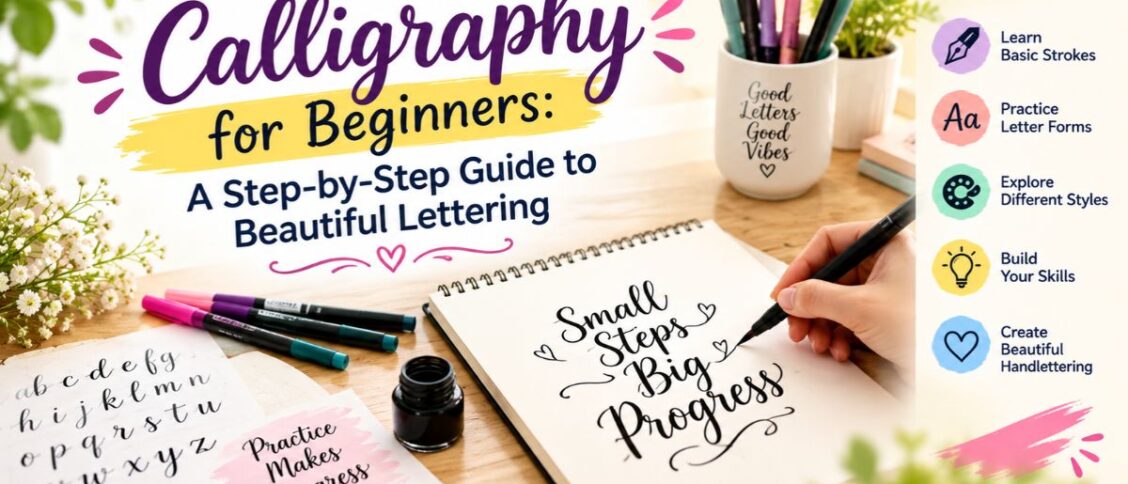
Step 2: Practise Basic Strokes
Before writing the alphabet, practise the strokes used to create letters.
These include:
- Straight lines
- Upward strokes
- Downward strokes
- Ovals
- Curves
- Loops
- Compound strokes
In many brush and pointed-pen styles, downward strokes are thicker while upward strokes are thinner. Practise applying pressure gradually and follow the techniques appropriate to your chosen pen.
Step 3: Learn Lowercase Letters
Once you are comfortable with basic strokes, begin practising lowercase letters.
Work on a few letters at a time. Observe their shape, height, slant, and spacing. Repeating each letter helps you become familiar with its structure.
Avoid rushing through the alphabet. Consistency is more important than speed during the early stages.
Step 4: Practise Uppercase Letters
After learning lowercase letters, move on to uppercase letters.
Some capital letters have additional curves, loops, and decorative elements. Start with simple forms before trying more elaborate lettering.
Step 5: Learn to Connect Letters
Connecting letters is an important part of creating flowing calligraphy.
Begin with simple letter combinations and short words. Pay attention to the way one letter leads into the next and maintain balanced spacing throughout the word.
Practise writing names and familiar words before attempting long sentences.
Step 6: Create Simple Lettering Projects
Once you have developed some control over your strokes and letters, apply your skills to small projects.
You can try:
- Writing your name in calligraphy
- Creating a personalised greeting card
- Designing a decorative bookmark
- Writing a short quotation
- Decorating a journal page
- Creating lettering for a school project
These activities help you apply your learning in practical and enjoyable ways.
Step 7: Review and Improve Your Work
Keep your practice sheets and review them regularly.
Look for uneven letter sizes, inconsistent spacing, irregular curves, and strokes that need better control. Repeat the exercises that you find difficult.
With regular practice, you can gradually develop more consistent and polished lettering.
How Calligraphy and Handwriting Improvement Are Connected
Calligraphy and handwriting improvement are related, but they are not the same skill.
Calligraphy focuses on artistic lettering, decorative strokes, and the visual presentation of words. Handwriting improvement focuses more directly on everyday writing skills, including legibility, letter formation, spacing, and writing consistency.
Both involve practising letter shapes and controlling pen movements, but learning calligraphy alone does not guarantee improved everyday handwriting.
For school students, developing legible handwriting is particularly useful because clear written work makes it easier for teachers to read assignments and understand students’ answers.
CalliStyle’s Handwriting Improvement Program focuses on handwriting development, while learners interested in artistic lettering can explore calligraphy courses according to their interests.
How CalliStyle Supports Handwriting and Creative Learning
CalliStyle provides learning opportunities in handwriting improvement and creative skills, including calligraphy. Its website also highlights school partnerships and handwriting-related training experiences.
Handwriting Improvement for Students
CalliStyle’s Handwriting Improvement Program aims to help students develop clearer, more consistent handwriting through guided learning and practice.
Improved handwriting presentation can make schoolwork easier to read and may help students communicate their written answers more clearly.
Calligraphy Learning Opportunities
Learners interested in creative lettering can explore calligraphy options such as brush pen and copperplate calligraphy.
These styles offer different techniques for creating decorative letters, personalised artwork, and creative writing projects.
School Partnerships and Training
CalliStyle collaborates with schools and educational institutions to support handwriting-related learning initiatives.
Schools interested in integrating handwriting sessions into their learning activities can contact CalliStyle to enquire about school partnerships and available training options.
Guided Practice and Learning Resources
Regular practice is important for developing both handwriting and calligraphy skills. Learners can use appropriate exercises and learning materials to practise techniques and review their progress.
To explore the options available, visit the official CalliStyle website at https://callistyle.in/.
Tips to Improve Your Calligraphy Faster
Beginners can make their practice more effective by following a few simple habits.
Practise for a Short Time Every Day
Start with 10–20 minutes of focused practice, adjusting the time to suit your schedule and comfort.
Maintain Consistent Letter Spacing
Pay attention to the spaces between letters and words. Balanced spacing helps make your lettering easier to read and visually appealing.
Use Guidelines
Guidelines can help you maintain letter height, slant, and alignment while practising.
Avoid Applying Too Much Pressure
Use controlled pressure according to your pen type. Excessive pressure may affect your strokes and damage some pen tips.
Learn from Feedback
Review your practice sheets and seek guidance when you are unsure about a particular stroke or letterform.
Be Patient with Your Progress
Calligraphy requires repetition and practice. Focus on improving one technique at a time rather than expecting perfect results immediately.
Frequently Asked Questions About Calligraphy for Beginners
Is calligraphy easy to learn for beginners?
Yes. Beginners can start with simple strokes and basic lettering exercises. More advanced styles require additional practice, but previous artistic experience is not essential.
What is the best calligraphy style for beginners?
Brush pen calligraphy is a popular starting point because brush pens are available in beginner-friendly formats. The most suitable style depends on your interests, tools, and learning preferences.
Can children learn calligraphy?
Yes. Children can practise age-appropriate lettering activities with suitable materials and guidance. Sessions should be adapted to their age and comfort level.
What is the difference between calligraphy and handwriting improvement?
Calligraphy focuses on artistic lettering and decorative writing. Handwriting improvement focuses on making everyday handwriting clearer, more consistent, and easier to read.
How long does it take to learn calligraphy?
Learners may become familiar with basic strokes in a few practice sessions. Developing consistent lettering and more advanced techniques can take several weeks or longer, depending on practice and experience.
Can I learn calligraphy online?
Online learning can provide demonstrations, instructions, and practice activities. Learners should choose suitable resources and practise regularly to develop their skills.
What calligraphy learning options does CalliStyle offer?
CalliStyle’s website includes calligraphy-related learning opportunities, including brush pen and copperplate calligraphy courses mentioned in student testimonials. Visit the official website or contact CalliStyle to confirm current course details and availability
Conclusion
Calligraphy for beginners is a rewarding way to explore artistic lettering, develop pen control, and create personalised designs. By starting with basic strokes, practising letters, and working on simple projects, learners can gradually develop their confidence and lettering skills.
For students who want to work on everyday handwriting, it is also important to practise legibility, letter formation, and spacing through suitable handwriting exercises.
CalliStyle offers learning opportunities in handwriting improvement and creative skills, helping learners explore options that match their interests.
Do follow us On Facebook