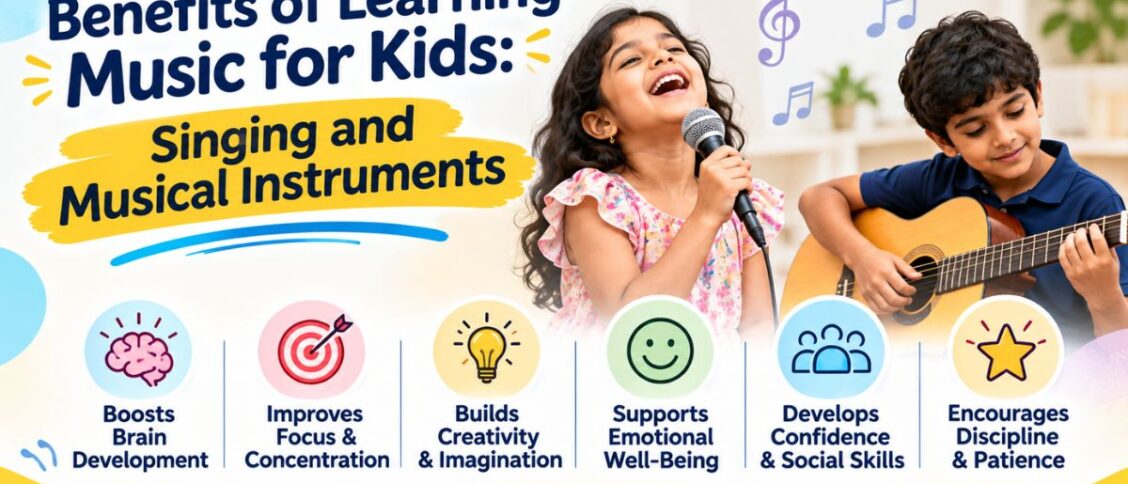

Benefits of Learning Music for Kids go beyond simply learning to sing a song or play an instrument. Music introduces children to creativity, rhythm, concentration, self-expression, and cultural traditions. Whether children enjoy singing, listening to classical music, or exploring musical instruments, learning music can become a valuable part of their development.
Music is a creative activity that children can explore from an early age. Singing helps them understand melodies and practise vocal skills, while musical instruments such as the Veena and Tabla introduce them to rhythm, coordination, and musical techniques.
With CalliStyle’s online music courses, children and adults can explore singing, Veena, and Tabla through structured lessons and guidance from experienced trainers.
Why Is Learning Music Important for Kids?
Music gives children an opportunity to explore their interests while developing different creative and practical skills. Regular music practice can also encourage discipline and confidence.
Here are some important reasons why children should explore music:
1. Encourages Creativity and Self-Expression
Music allows children to express their feelings and ideas through singing, melodies, and musical instruments. They can experiment with different sounds, rhythms, and tunes while discovering their creative interests.
2. Improves Concentration
Learning a song or practising an instrument requires attention and regular practice. Children need to remember musical notes, follow rhythms, and understand instructions. These activities encourage concentration and listening skills.
3. Develops Patience and Discipline
Learning music takes time. Children gradually improve by practising vocal exercises, musical notes, and instrument techniques. This process teaches them patience, consistency, and discipline.
4. Supports Memory Development
Remembering lyrics, melodies, rhythms, and musical patterns gives children opportunities to practise memory skills. Regular music lessons involve recalling what they have learned and applying it during practice.
5. Builds Confidence
Learning a new song or playing an instrument can give children a sense of achievement. Performing what they have practised in front of others can also help them become more comfortable expressing themselves.
6. Introduces Cultural Awareness
Indian classical music and traditional instruments introduce children to different musical traditions. Learning instruments such as the Veena and Tabla can help them explore India’s rich musical heritage.
7. Provides a Relaxing Creative Activity
Singing and playing musical instruments can be enjoyable ways to spend free time. Music gives children an opportunity to take a break from everyday routines and engage in a creative activity.
Benefits of Singing for Kids
Singing is one of the easiest ways for children to begin exploring music. They can start with familiar songs and gradually learn vocal exercises, melodies, and different singing styles.
Some important benefits of singing include:
1. Develops Vocal Skills
Singing lessons introduce children to basic vocal exercises, pitch, rhythm, and melody. With practice, they can learn to control their voices and sing more confidently.
2. Encourages Creative Expression
Children can express themselves through songs and different musical styles. Singing provides an enjoyable way to explore emotions and creativity.
3. Improves Listening Skills
To sing a song correctly, children need to listen carefully to melodies, notes, and rhythms. This encourages active listening and musical awareness.
4. Supports Breathing Awareness
Singing exercises encourage children to become more aware of their breathing and how they use their voices while singing.
5. Builds Social and Performance Skills
Learning songs and participating in musical activities can help children become comfortable sharing their abilities with others. Singing can also be a useful skill for group performances and future creative opportunities.
Benefits of Learning Musical Instruments
Learning a musical instrument introduces children to rhythm, coordination, and different musical techniques. It also allows them to explore music beyond singing.
Two traditional Indian instruments children can explore through CalliStyle are the Veena and Tabla.
Benefits of Learning Veena for Kids
The Veena is a traditional Indian string instrument associated with classical music and the Goddess Saraswati. It is known for its distinctive sound and connection to Indian musical traditions.
Learning the Veena can offer several benefits:
- Develops Musical Understanding: Children learn musical notes, melodies, and basic classical music concepts.
- Encourages Patience: Practising instrument techniques requires regular effort and consistency.
- Improves Coordination: Playing the Veena involves coordinating hand movements while following musical patterns.
- Encourages Creativity: Learners can explore classical songs and develop their understanding of melodies.
- Introduces Indian Culture: The Veena helps children become familiar with traditional Indian music.
Benefits of Learning Tabla for Kids
The Tabla is a popular Indian percussion instrument used in classical and other musical styles. It helps learners explore rhythm, beats, and different patterns.
Some benefits of learning Tabla include:
- Develops Rhythm Awareness: Children learn to recognise and practise different beats and rhythmic patterns.
- Improves Hand Coordination: Playing Tabla requires controlled hand and finger movements.
- Encourages Body Awareness: Learners practise coordinating their movements while following rhythms.
- Develops Self-Control: Practising different beats requires attention and control over hand movements.
- Builds Musical Confidence: As children learn new rhythms, they can gradually develop confidence in their musical abilities.
Singing vs. Musical Instruments: What Should Kids Learn?
Both singing and playing instruments offer valuable learning experiences. The right choice depends on a child’s interests and the type of music they enjoy.
| Learning Area | Singing | Veena | Tabla |
| Main skill | Vocal techniques | String instrument techniques | Rhythm and percussion |
| Focus | Voice, pitch, melody | Notes and melodies | Beats and rhythms |
| Practice | Vocal exercises and songs | Playing notes and songs | Hand movements and taals |
| Creative development | Musical expression | Melodic creativity | Rhythmic creativity |
| Cultural learning | Western and classical singing | Indian classical music | Indian percussion traditions |
Children can begin with the activity they enjoy most. They can also explore more than one musical skill as their interests develop.
Why Choose Online Music Classes for Kids?
Online music classes make it convenient for children to learn from home. They can attend structured lessons, practise musical techniques, and receive guidance without travelling to a physical classroom.
CalliStyle offers online courses in Singing, Veena, and Tabla for learners interested in developing their musical abilities.
Key Features of CalliStyle Music Courses
- Experienced Trainers: Learn from teachers and trainers with over seven years of experience.
- Small Learning Groups: Classes have no more than two students, allowing individual attention.
- Flexible Online Learning: Attend classes from home according to the available schedule.
- Mobile-Friendly Classes: Learn using a mobile device without necessarily needing a laptop.
- Practical Assignments: Improve musical skills through regular practice activities.
- Doubt-Clearing Support: Get questions answered through a Q&A forum.
- Post-Course Support: Receive mentor support even after completing the course.
- Course Certification: Receive certification after completing the course.
- Downloadable Content: Access downloadable learning materials with lifetime access, as described on the course pages.
CalliStyle also follows the Observation, Engagement, and Attraction learning model to help students learn at their own pace.
What Will Kids Learn in CalliStyle’s Online Music Courses?
CalliStyle offers different music courses for learners who want to explore vocal training and traditional Indian musical instruments.
1. Online Singing Course
CalliStyle’s Singing Course covers both Western and Classical singing.
The syllabus includes:
- Vocal exercises
- Basic singing techniques
- Understanding melodies
- Learning to sing melodiously
The course is designed for beginners as well as learners who want to develop their singing skills.
Course duration: The course page mentions 18 classes for the selected singing course.
2. Online Veena Classes
The CalliStyle Veena Course introduces learners to the fundamentals of playing this traditional Indian string instrument.
The syllabus includes:
- Basics of playing the Veena
- Learning Sargam and Taals
- Learning to play songs
- Understanding how to read music
The course is divided into beginner, intermediate, and advanced batches over a one-month course period. Students can choose the levels according to their learning requirements.
3. Online Tabla Classes
The CalliStyle Tabla Course helps learners understand the basics of playing the Tabla and develop their rhythmic skills.
The syllabus includes:
- Basics of playing the Tabla
- Learning Sargam and Taals
- Learning to play songs
- Understanding how to read music
The course page lists 80 classes for one course option and 90 classes for another. Contact CalliStyle to confirm the applicable course structure and current schedule.
At What Age Can Children Start Learning Music?
Children can explore simple musical activities from an early age. The suitable starting point depends on their interests, attention span, and readiness to participate in lessons.
According to CalliStyle’s course pages:
- Singing: Available for learners aged four years and above.
- Veena: Available for learners aged four years and above.
- Tabla: Available for learners aged five years and above.
Music is not limited to children. Students, working professionals, business owners, homemakers, and adults can also explore these courses.
Tips to Encourage Kids to Learn Music at Home
Parents can help children develop an interest in music by making practice enjoyable and consistent.
Here are some simple suggestions:
- Introduce Different Music Styles: Let children listen to classical, Western, and other musical styles.
- Encourage Singing: Start with familiar songs and simple melodies.
- Explore Musical Instruments: Introduce instruments such as Veena and Tabla based on their interests.
- Create a Practice Routine: Set aside a regular time for musical practice.
- Appreciate Their Progress: Encourage children when they learn a new song, note, or rhythm.
- Avoid Pressure: Allow children to explore music at a comfortable pace.
- Choose Structured Lessons: Experienced trainers can help children understand musical concepts and develop their skills step by step.
Start Your Child’s Music Learning Journey with CalliStyle
Learning music can be an enjoyable way for children to explore creativity, develop musical skills, and discover their interests. Whether they want to sing their favourite songs, learn the traditional Veena, or practise Tabla rhythms, each activity offers a different musical experience.
CalliStyle provides online Singing, Veena, and Tabla courses with experienced trainers, small learning groups, practical assignments, doubt-clearing support, and course certification.
If your child is interested in music, explore the available courses and book a demo to understand the learning approach.
Help your child discover the joy of music with CalliStyle’s online music classes!
Frequently Asked Questions
1. What are the benefits of learning music for kids?
Learning music can encourage creativity, concentration, memory practice, patience, self-expression, and confidence. It also introduces children to different musical styles and cultural traditions.
2. Is singing good for children?
Singing helps children explore vocal skills, rhythm, melodies, and creative expression. It also gives them opportunities to practise listening and performance skills.
3. Which musical instrument is suitable for beginners?
The choice depends on the child’s interest. Children interested in Indian classical string instruments can explore the Veena, while those interested in beats and rhythms can consider the Tabla.
4. Can children learn singing online?
Yes. Children can learn singing online through structured lessons, vocal exercises, and trainer guidance. CalliStyle offers beginner-to-advanced Western and Classical singing courses.
5. Can kids learn Veena online?
Yes. Children can learn the basics of playing the Veena online, including Sargam, Taals, songs, and reading music through structured lessons.
6. Can kids learn Tabla online?
Yes. Online Tabla lessons can introduce children to basic playing techniques, Sargam, Taals, and songs.
Do follow us on Facebook